While Benedictine history is unquestionably impressive, what is surprising is the contemporary revival of interest in the insights this storied tradition has to offer those seeking to craft lives of discipleship in today’s world. The decades since Vatican II have seen a marked increase in the number of Oblates and associates—those with formal ties to monastic communities who apply the Rule of Benedict to married or single life outside the monastery.
Showing posts with label new monasticism. Show all posts
St. Benedict's Rule for Today?
While Benedictine history is unquestionably impressive, what is surprising is the contemporary revival of interest in the insights this storied tradition has to offer those seeking to craft lives of discipleship in today’s world. The decades since Vatican II have seen a marked increase in the number of Oblates and associates—those with formal ties to monastic communities who apply the Rule of Benedict to married or single life outside the monastery.
Not Quite Neomonastic: What Churches can learn from Christian Intentional Communities
The rise of the “new monasticism” to popular awareness in recent years might lead the uninformed to imagine that Christian communalism is a recent phenomenon. The truth is Christians have lived in intimate community settings since the very beginning. What’ is “new” about new monasticism is largely a matter of its historical and geographical contexts, the catchy label and the recent dialog with the Benedictine tradition. Christine Pohl considers this conversation to be among the most promising in the church today. This essay explores the resonance between these two expressions of Christian communalism and the contributions they might make to more traditional, institutional Christian congregations.
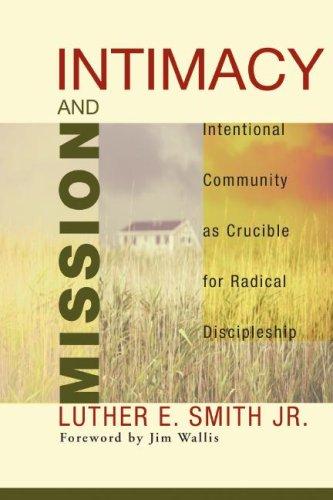
In 1994, Luther E. Smith Jr, published Intimacy and Mission: Intentional Community as Crucible for Radical Discipleship which analyzes five Christian intentional communities representative of a larger sample of 68.[1] Each of those surveyed express an intentional commitment to meaningful fellowship (intimacy) and prophetic witness (mission) in the world and conform to “normative patterns of Christian conduct”.[2] Smith understands his research as an investigation into “practical efforts to renew the local church” and translates his astute observations into relevance for the church today.[3]
Tasting the Future: New Monasticism's Eschatological Basis
An introduction to new monasticism could easily depict it as little more than a radical expression of Christian community best understood through a catalog of its common practices. School(s) for Conversion: 12 Marks of a New Monasticism, which was the product of a 2004 gathering of new monastic practioners, provides an excellent introduction to these characteristics, but its more central and easily overlooked contribution is the identification of its teleological nature. These eschatological underpinnings are the basis for the deservedly disproportionate impact the New Monasticism (NM) is making in contemporary ecclesiological reflection and discourse. This essay will highlight the eschatological directionality of the twelve marks in School(s) for Conversion and engage critically with the implications Jonathan Wilson-Hartgrove suggests for the broader Christian community in New Monasticism: What it Has to Say to Today’s Church.
Subscribe to:
Posts (Atom)